简体中文
简体中文
 English
 عربى
عربى
Content
- 1 Why Stainless Steel for Stamped Parts
- 2 Common Stainless Steel Grades in Stamping
- 3 Stamping Processes Suited for Stainless Steel
- 4 Design for Manufacturability: Key Rules
- 5 Surface Treatments and Finishing
- 6 Where Stainless Steel Stampings Excel
- 7 Quality Verification and Testing
- 8 Partnering with a Stainless Steel Stamping Specialist
A single progressive stamping die can churn out over 3 million stainless steel components before needing refurbishment. That throughput number sets the baseline economic argument for this process. And when the application demands parts that resist rust, handle thermal cycling, or survive chemical exposure, stainless steel stamping becomes the go-to fabrication method. This article breaks down the material choices, forming techniques, design rules, and quality benchmarks that define successful stainless steel stamping projects.
Why Stainless Steel for Stamped Parts
Stainless steel stamping converts flat sheets into functional components through cutting, bending, drawing, and coining. The material itself brings three distinct advantages. First, chromium content above 10.5% provides a self-healing oxide layer that prevents corrosion without coatings. Second, the alloy family spans a wide range of mechanical properties — from deep-drawable austenitics to spring-tempered martensitics. Third, stainless steel retains its strength at elevated temperatures far better than carbon steel or aluminum.
Stampers often specify stainless when the part lives in a wet, acidic, or high-temperature environment where failure means costly downtime or safety risks. Food processing equipment, surgical instruments, automotive exhaust components, and marine hardware all rely on this combination of durability and formability. The ability to integrate complex features — louvers, embossments, coining, and threading — within a single press stroke eliminates secondary operations and trims part cost, even with a pricier raw material.
Common Stainless Steel Grades in Stamping
Not all stainless grades stamp the same way. The choice of alloy directly impacts tool wear, forming limits, and final part properties. Below is a comparison of the four workhorses seen in high-volume stamping.
| Grade | Yield Strength (MPa) | Corrosion Resistance | Cold Formability | Common Applications |
|---|---|---|---|---|
| 304 (A2) | 215–290 | Very good | Excellent | Kitchen sinks, automotive trim, chemical containers |
| 316 (A4) | 240–310 | Superior (resists chlorides) | Good | Marine hardware, pharmaceutical equipment, surgical parts |
| 301 | 205–270 (annealed), work-hardens rapidly | Good | Moderate (springback increases with temper) | Springs, clamps, high-strength brackets |
| 430 | 275–310 | Moderate | Fair (less ductile) | Appliance panels, decorative trim, lower-cost brackets |
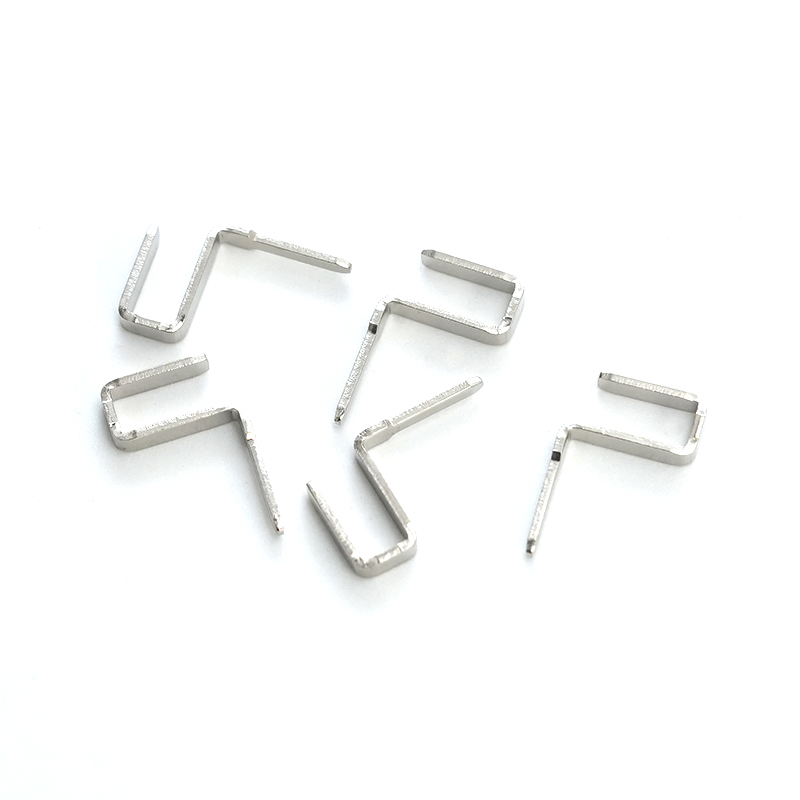
304 remains the default starting point for general-purpose stampings. It draws deeper than 316 and costs less. However, when chlorides are present — think seawater or aggressive cleaning agents — 316’s molybdenum addition prevents pitting that would destroy 304. For parts that must double as springs, like stamped stainless steel electronic plug-in contacts, 301 in a high-temper condition delivers the necessary snap-back force. Ferritic grade 430 serves well in indoor applications where cosmetics matter more than extreme corrosion resistance.
Stamping Processes Suited for Stainless Steel
The production technique depends on part geometry, annual volume, and tolerance demands. Stainless steel’s high work-hardening rate and springback tendency make process selection critical.
Progressive Die Stamping
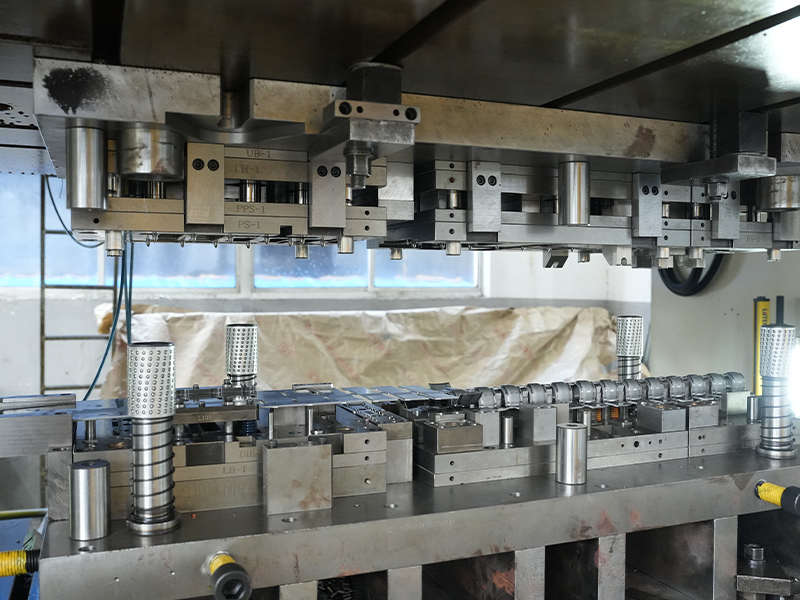
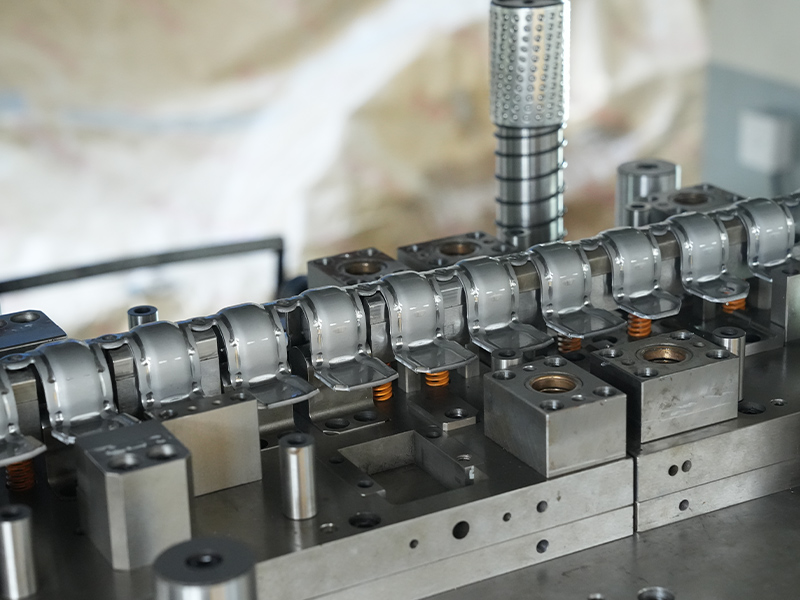
A coil feeds through multiple stations, each performing a discrete operation — piercing, forming, coining, coining, and cutoff. Progressive dies achieve the highest throughput for complex 2D or shallow 3D parts, such as brackets, shields, and shrapnel. The design must account for the strip carrier and piloting system. Stainless steel requires heavier press tonnage and more frequent die maintenance than mild steel due to its higher strength and galling potential.
Deep Drawing
Cylindrical or box-shaped parts — like sensor housings, cups, or caps — typically use deep drawing. Austenitic grades 304 and 316 offer excellent draw ratios, often exceeding 2.0 in a single draw. Multiple redraws and annealing steps may be necessary for ultra-deep geometries. Tool surfaces require polished inserts and special lubricants to prevent galling, as stainless is prone to material pickup on carbide punches.
Fineblanking
For parts needing near-net-shape, smooth-cut edges with tight positional tolerances, fineblanking is the answer. This hydraulic triple-action process virtually eliminates the fracture zone typical of conventional blanking, producing a 100% shear edge. Stainless steel fineblanked components often replace machined parts in automotive seat mechanisms, lock components, and precise brackets — eliminating secondary grinding.
Design for Manufacturability: Key Rules
Design decisions made upstream echo through tooling cost and part quality. Following a few rules avoids expensive rework.
- Bend radii. For 304, inside bend radius should be at least 1x material thickness to prevent cracking. For harder tempers like 301 half-hard, use 2x–3x thickness.
- Hole placement. Maintain a minimum distance of 2x material thickness from hole edge to bend, and 1x from edge to edge. Closer placements stretch and distort holes.
- Springback compensation. Stainless steel springs back more than carbon steel. Bending dies require overbending angles — typically 3 to 8 degrees for 304, and more for work-hardened grades.
- Grain direction. Bends perpendicular to rolling direction risk cracking in thin, hard material. Orient critical bends along the grain when possible.
- Burr control. A precise die clearance (usually 6%–10% of material thickness per side) minimizes burr height. Specify burr direction in the part drawing to match assembly needs.
For components that experience thermal cycling — like automotive heat shields — adding embossments or ribs improves stiffness and reduces distortion. These features also lower the risk of oil canning in large flat panels.
Surface Treatments and Finishing
Stainless stampings often leave the press in a ready-to-use state, but additional surface treatments enhance function or appearance.
- Passivation. An acid bath removes free iron and contaminants, optimizing the natural chromium oxide layer. Standard for medical and food-contact parts.
- Electropolishing. Electrochemical removal of surface material creates an ultra-smooth, bright finish that reduces bacteria adhesion and improves cleanability. Common for pharmaceutical fluid path components.
- Deburring and tumbling. Vibratory finishing with ceramic media knocks off sharp edges and produces a uniform matte finish.
- Powder coating or plating. Though stainless resists corrosion bare, some architectural or consumer-facing parts get a colored coating for aesthetics.
Passivation is rarely optional for parts exposed to corrosive environments. Without it, embedded tool steel particles from the stamping process can initiate rust spots, negating the stainless advantage.
Where Stainless Steel Stampings Excel
The application list is long, but a handful of sectors consume most high-precision stainless stampings.
Automotive
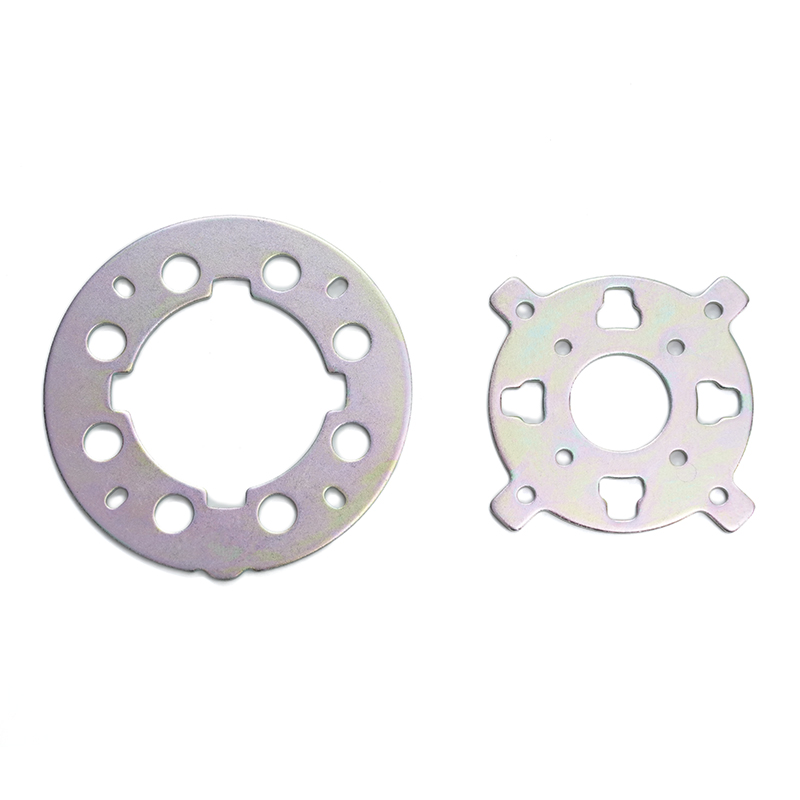
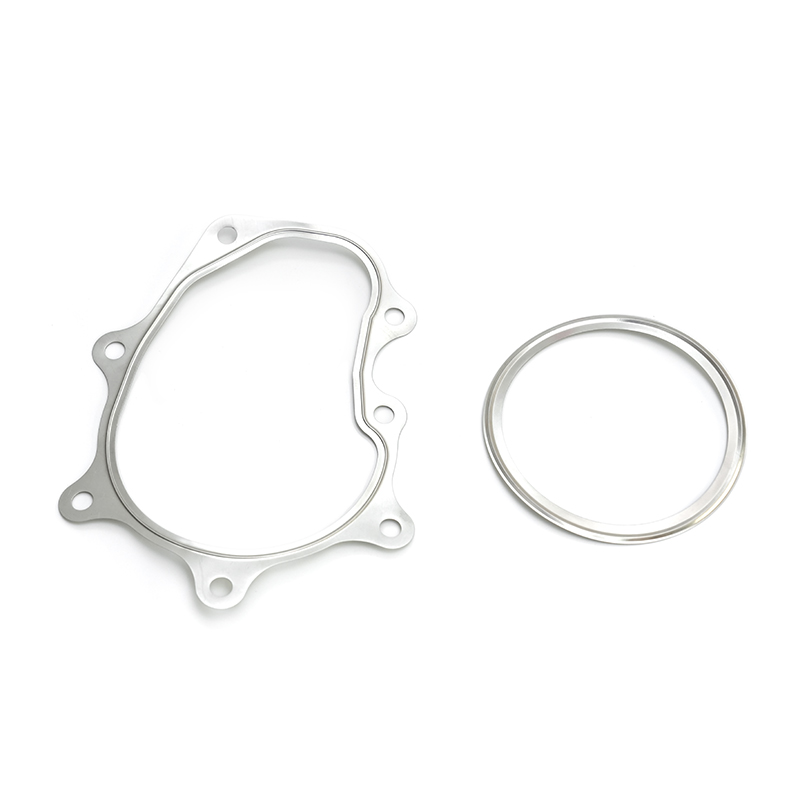
Exhaust flanges, turbocharger sealing gaskets, heat shields, and fuel system brackets all demand a mix of temperature resistance and mechanical strength. Stainless steel stampings deliver that while shedding weight versus cast alternatives. See high-pressure resistant stainless steel brackets for engine bay applications.
Medical Devices
Surgical staples, forceps, implant components, and diagnostic instrument parts require biocompatibility and absolute cleanliness. 316L, an extra-low-carbon variant of 316, dominates here because it resists sensitization during welding even after stamping.
Electronics
Shields, spring contacts, and connector bodies stamped from thin-gauge stainless provide EMI shielding and reliable mechanical retention. Fineblanked stainless shims and spacers control air gaps in hard disk drives and optical assemblies.
Food and Beverage Equipment
Mixer blades, canning line parts, and pump components face constant washdowns and acidic foods. 304 and 316 stampings withstand these conditions without leaching or degrading.
Quality Verification and Testing
Stainless stamping suppliers should provide evidence of process control beyond dimensional checks.
- SPC data on critical-to-function tolerances, sampled per lot.
- Material certifications that trace heat numbers to mill test reports, confirming alloy composition.
- Salt spray testing (ASTM B117) to validate passivation effectiveness; a typical acceptance criterion is no red rust after 200 hours of exposure.
- Hardness testing for work-hardened parts like spring clips, ensuring the right temper.
- Optical comparator or vision system inspection for complex profiles that exceed caliper capability.
First article inspection reports should include a full layout of all dimensions from the print, not just a sampling. This establishes baseline capability before thousands of parts roll out.
Partnering with a Stainless Steel Stamping Specialist
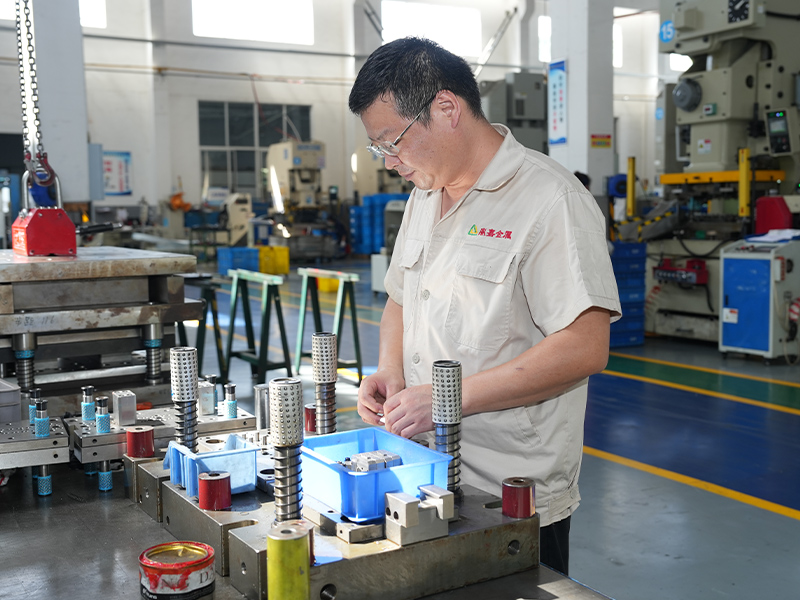
Success with stainless steel stamping parts hinges on early collaboration between design engineers and the stamping supplier. Discuss alloy selection, tooling strategy, and expected volumes before locking the part geometry. A shop with in-house wire EDM for die making, progressive die simulation software, and a documented quality system will navigate the nuances of stainless better than a general-purpose stamper.
Ask for process-level DFM feedback, not just a quote. The right partner identifies opportunities to combine parts, eliminate secondary operations, and adjust tolerances for manufacturability without sacrificing function. This approach cuts piece price and accelerates ramp-up, turning a sheet of stainless steel into a reliable, high-volume component that meets both performance and cost targets.