简体中文
简体中文
 English
 عربى
عربى
Content
- 1 Defining the Material Composition
- 2 Electrical Conductivity and Practical Limits
- 3 The Superiority of Corrosion and Stress Resistance
- 4 Comparing Spring Materials for Contact Design
- 5 Optimal Target Applications for This Alloy
- 6 Plating Compatibility and Surface Preparation
- 7 Fabrication and Stamping Considerations
- 8 Defining Optimal Mating and Cycle Life
The core value of a phosphor bronze connector lies in its unique balance of strength and flexibility. Unlike pure copper, which lacks mechanical resilience, phosphor bronze provides superior fatigue resistance and corrosion protection. This makes it the definitive choice for applications where repeated mating cycles and exposure to elevated temperatures are unavoidable.
Defining the Material Composition
To understand the connector’s performance, one must first grasp the alloy itself. Phosphor bronze is a copper-based alloy containing tin and a trace amount of phosphorus. The typical composition balances conductivity with mechanical strength, creating a material distinctly suited for spring-loaded contacts.
The tin content generally ranges from 1% to 11%, depending on the specific grade required for a project. The phosphorus element, often present in fractions of a percent, acts as a deoxidizing agent during the casting process. Most critically for electronic design, this addition dramatically enhances the fatigue life of a connector because it refines the grain structure of the metal, preventing micro-cracking during flexure.
Electrical Conductivity and Practical Limits
Engineers often debate the trade-off between mechanical spring force and electrical efficiency. While brass offers a higher conductivity percentage, it loses tension rapidly under thermal load. Phosphor bronze provides a practical middle ground. It typically offers a conductivity rating of approximately 15% to 20% IACS (International Annealed Copper Standard).
For most signal-level circuits, this resistance is negligible. However, for high-current power delivery, a designer must calculate the cross-sectional area carefully. The key advantage here is stability; where a lower-grade brass contact might relax and create a high-resistance oxide layer over time, a phosphor bronze connector maintains a stable, gas-tight connection because of its constant spring-back force. This directly prevents intermittent faults in critical sensing equipment.
The Superiority of Corrosion and Stress Resistance
The operational environment often dictates the lifespan of a connector. This is where phosphor bronze outperforms many base metals. It exhibits excellent resistance to atmospheric corrosion, particularly against sulfur compounds and humidity that rapidly degrade silver or pure copper.
A more significant mechanical property is its resistance to stress relaxation. When a connector is inserted, the female contact deforms elastically. In standard brass, elevated temperatures of just 75°C can cause permanent deformation, dropping contact force by up to 20% in a few hundred hours. Phosphor bronze retains its normal force significantly better under identical conditions, ensuring that the electrical interface remains viable even inside sealed, high-temperature units like automotive engine sensors or industrial control modules.
Comparing Spring Materials for Contact Design
To specify a contact alloy correctly, direct comparison against alternatives like beryllium copper or cartridge brass is essential. While phosphor bronze is not the solution for every scenario, its cost-to-performance ratio is frequently optimal.
| Material | Conductivity | Fatigue Life | Stress Relaxation |
|---|---|---|---|
| Cartridge Brass | ~28% IACS | Low | Poor (High Risk) |
| Phosphor Bronze | ~15-20% IACS | Excellent | Superior |
| Beryllium Copper | ~22-25% IACS | High | Excellent |
The table illustrates a clear trade-off. Brass fails mechanically under stress. Beryllium copper offers better conductivity and strength but at a substantially higher material cost and with toxic dust concerns during stamping. Phosphor bronze occupies the critical center position, sacrificing a small amount of conductivity for a massive gain in durability and safety, making it ideal for high-reliability, mid-cycle connectors.
Optimal Target Applications for This Alloy
Identifying the correct use case prevents over-engineering or premature field failure. Phosphor bronze connectors are not high-power transmission components, nor are they cheap throwaway pins. They are precision devices.
Telecommunication and Terminal Blocks
In screw-down terminal blocks, the wire is often clamped directly. When the screw is torqued, the connector must flex without cracking. Phosphor bronze provides the necessary ductility, creating a cold weld with the copper wire under pressure, which minimizes resistance drift over decades of service.
PCB Board-to-Board Interconnects
Modern mezzanine connectors require extremely thin, stamped contacts. Wall thicknesses can drop to 0.15mm. At these gauges, brass fails after a few insertion cycles. Phosphor bronze allows the female contact beam to deflect fully without permanent set, guaranteeing a mating cycle life that can exceed 500 to 1,000 cycles in field-replaceable modules, even without gold plating, provided the environment is controlled.
Electromagnetic Interference Shielding
Spring finger contacts on shielding cages require an alloy that does not relax. If the grounding finger loses tension, the EMI shield gap opens, causing radiated emissions failure. Phosphor bronze spring fingers retain their geometry, ensuring continuous 360-degree shielding contact during thermal cycling.
Plating Compatibility and Surface Preparation
A phosphor bronze connector is almost never used in its bare form commercially. The alloy serves as the structural backbone for a plated finish, usually tin or gold. The compatibility between the substrate and the plating determines corrosion resistance.
Tin plating is cost-effective and offers sacrificial protection. However, phosphor bronze is susceptible to tin whisker growth under compressive stress, a phenomenon well-documented in pure tin finishes. Mitigation involves a slight post-plating heat treatment or the use of a nickel underplate. For mission-critical avionics, gold over nickel plating is standard. The hardness of the nickel underlayer supports the gold, preventing wear-through, while the resilient phosphor bronze base applies the constant normal force required to break occasional oxide films on the mating pin.
Fabrication and Stamping Considerations
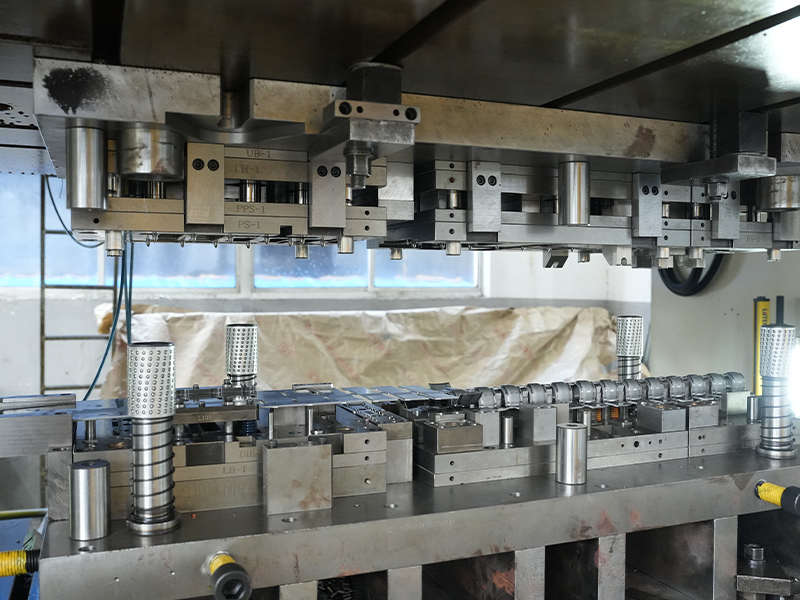
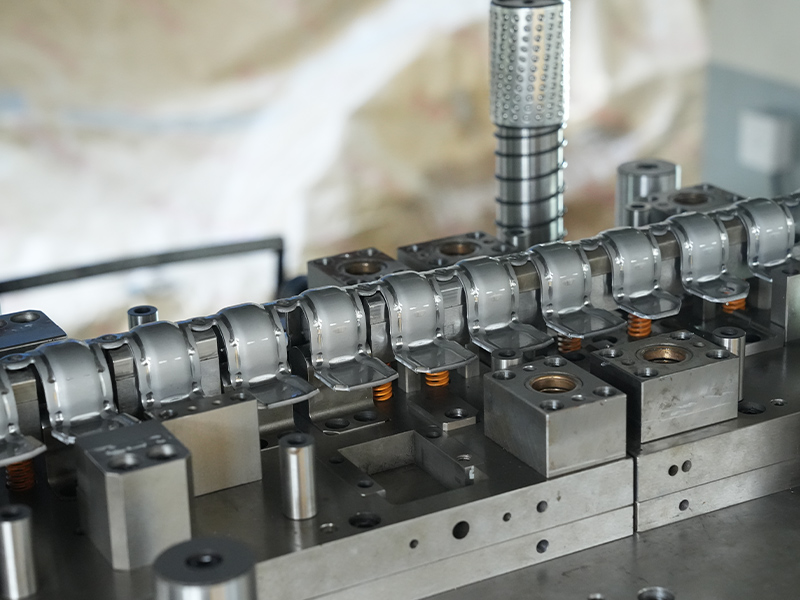
Tooling wear is a significant cost factor in high-volume connector manufacturing. Phosphor bronze is progressively machinable but possesses a different wear pattern on carbide stamping dies compared to softer pure copper.
The phosphorus content makes the chips slightly more abrasive. Production data from high-speed stamping lines indicates that die maintenance intervals for phosphor bronze might be 10-15% shorter than for brass when running at identical speeds. However, this manufacturing cost is offset almost entirely by the reduction in field returns. A connector that retains its spring force eliminates the warranty costs associated with intermittent signal loss, which often accounts for the largest percentage of total lifecycle cost in electronic assemblies.
Defining Optimal Mating and Cycle Life
The true measure of a connector is its contact normal force over time. The design target for a phosphor bronze contact typically ranges from 50 to 150 grams of force for signal contacts. This range is high enough to break through surface oxides but low enough to prevent excessive insertion forces on multi-pin arrays.
Long-term durability testing reveals that phosphor bronze sustains a contact force retention rate above 85% after environmental aging. This contrasts sharply with yellow brass, which can fall below 60% retention, transitioning from a spring to a rigid, deformed piece that merely rests against the pin. Selecting this alloy is a direct investment in the long-term reliability of the interconnect system.