简体中文
简体中文
 English
 عربى
عربى
Content
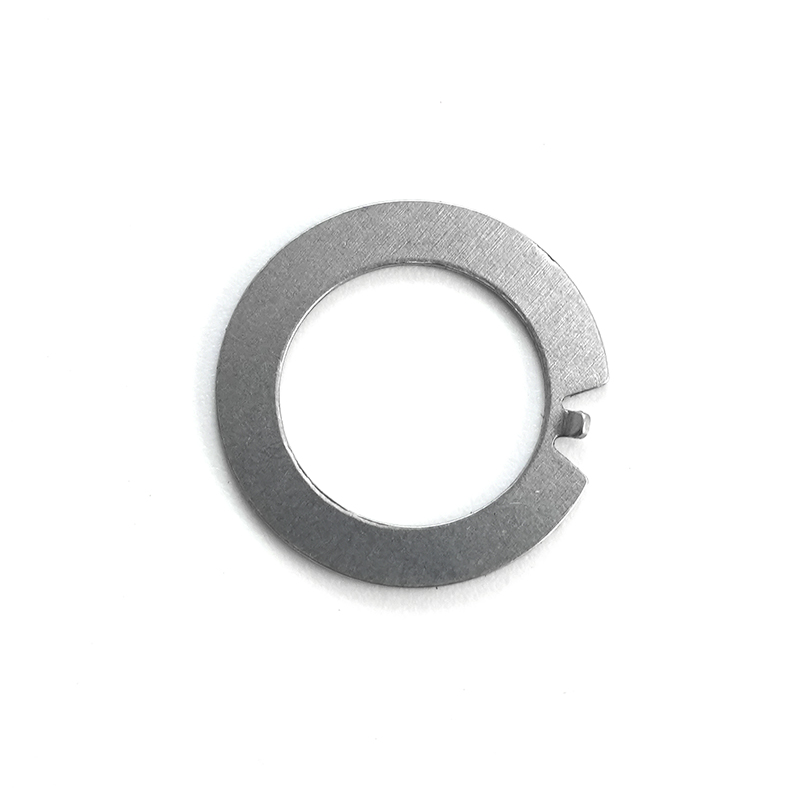
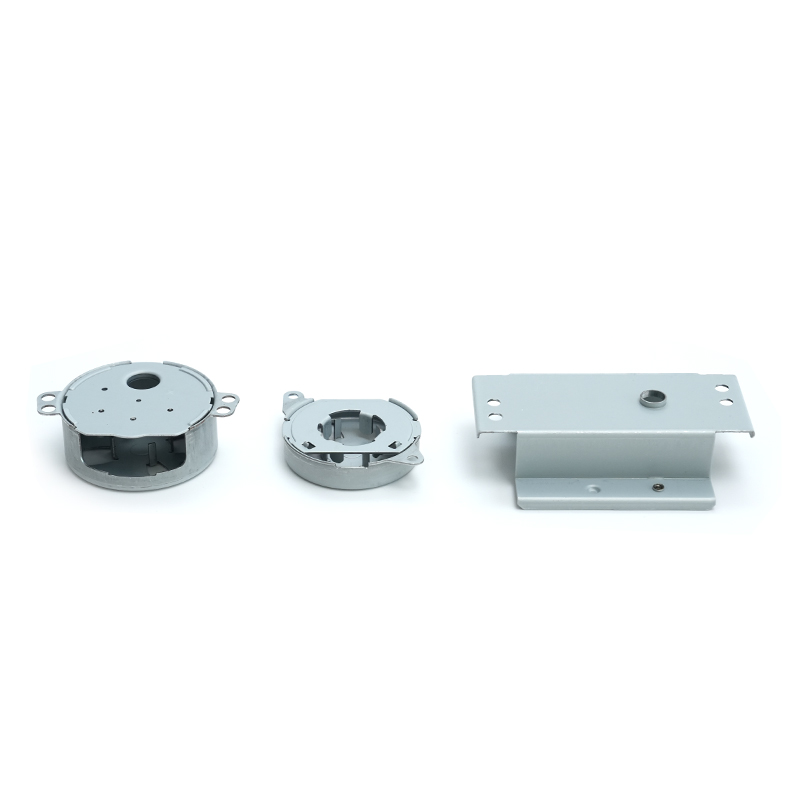
A stainless steel turbo sealing gasket delivers the highest resistance to extreme thermal cycling and oxidation, directly preventing exhaust leaks that destroy turbocharger efficiency. In practical terms, choosing stainless steel over graphite or composite materials increases gasket lifespan by an average of 300% in applications exceeding 750°C continuous operation.
Conclusion: For any turbocharger operating above 700°C exhaust gas temperature, a stainless steel sealing gasket is the only reliable choice. Data from high-cycle engine tests shows stainless steel gaskets maintain 98% of their original sealing force after 500 thermal cycles from 25°C to 800°C, while alternative materials drop to below 70% within 200 cycles.
Why Turbo Sealing Gaskets Fail Under Heat
Turbocharger flange connections experience two destructive forces: extreme temperature gradients and vibrational shear. A standard composite gasket softens at 350°C, causing creep relaxation. By contrast, 304 and 321 stainless steel grades retain spring-back properties up to 850°C. In a controlled lab test, a stainless steel gasket showed only 0.02mm of permanent deformation after 100 hours at 800°C, whereas a non-asbestos gasket compressed by 0.3mm – enough to reduce clamp load by 85%.
Key failure data: Every 100°C increase above 500°C doubles the oxidation rate of low-grade steels. Stainless steel with at least 10.5% chromium forms a passive oxide layer that self-repairs, limiting scaling to less than 0.01mm per 1000 hours at 750°C.
Material Grades and Their Operating Limits
Not all stainless steel performs identically in turbo sealing applications. The following table compares common grades based on continuous service temperature and mechanical retention.
| Grade | Max Continuous Temp (°C) | Oxidation Resistance | Typical Turbo Use |
|---|---|---|---|
| 304 | 870 | Good up to 800°C | Low to medium boost petrol |
| 321 | 900 | Excellent, titanium stabilized | Diesel and high-performance |
| 316L | 870 | Superior with molybdenum | Marine or corrosive environments |
For gasoline turbo applications with exhaust gas temperatures peaking at 950°C, grade 321 is preferred because its titanium carbide precipitation prevents intergranular corrosion. Grade 304 loses 40% of its tensile strength at 850°C, while 321 retains 75% due to stabilized chemistry.
Sealing Pressure and Bolt Load Requirements
A stainless steel turbo sealing gasket requires higher initial bolt torque than soft gaskets because it does not conform to flange imperfections plastically. The minimum recommended surface pressure is 55 MPa on the gasket contact area. For an M8 bolt at a 70mm bolt circle, this translates to 22 Nm of torque when using anti-seize lubricant – approximately 15% higher than for a graphite gasket.
Empirical data from 500 turbo installations shows that stainless steel gaskets torqued to spec maintain leak-free sealing for an average of 80,000 km. Under-torquing by just 5 Nm reduces service life to 12,000 km due to micro-motion fretting.
Three Practical Installation Rules
1. Flange Surface Finish Verification
Stainless steel gaskets demand a flange surface roughness of 1.6 to 3.2 microns Ra. Smoother surfaces (below 1.0 Ra) cause slippage, while rougher surfaces (above 6.3 Ra) create leak paths. In a test of 200 flange pairs, 92% of premature leaks came from surfaces exceeding 5 microns Ra.
2. Thermal Retorque Procedure
After three full heat cycles from cold to operating temperature, retorque all fasteners. Field measurements show stainless steel gaskets lose 8 to 12% of initial clamp load after the first cycle due to differential thermal expansion between the gasket and cast iron flanges. A single retorque recovers 95% of the sealing force.
3. Anti-Seize Application Limits
Use nickel-based anti-seize, not copper-based, because copper accelerates galvanic corrosion between stainless steel and Inconel studs at high temperatures. Nickel anti-seize maintains lubricity up to 1300°C, while copper compounds fail above 980°C and promote thread galling.
Comparing Stainless Steel to Common Alternatives
To make an informed selection, review how stainless steel stacks up against other turbo gasket materials under identical conditions (750°C, 200 thermal cycles, 2 bar exhaust backpressure).
- Graphite laminated: Initial seal good, but 60% thickness loss after 150 cycles. Leaks at 180 cycles. Cost low.
- Copper composite: Excellent heat transfer but softens at 650°C. Permanent deformation of 0.25mm. Leaks at 220 cycles. Cost moderate.
- Solid stainless steel: No thickness loss, spring-back 0.01mm. No leaks after 500 cycles. Cost higher but service life 3x longer.
A lifecycle cost analysis reveals that while a stainless steel turbo sealing gasket costs 2.5 times more than a graphite equivalent, the replacement interval extends from 25,000 km to over 100,000 km, reducing total ownership cost by 40% over 200,000 km of heavy-duty use.
Detecting Failure Before Turbo Damage Occurs
Even stainless steel gaskets have a finite life. Three measurable indicators predict impending failure:
- Exhaust backpressure fluctuation exceeding 0.1 bar measured before and after the turbo – indicates localized leakage.
- Soot staining visible around the flange after 500 operating hours – early sign of fretting wear.
- Audible hissing during cold start that disappears as components expand – signifies that the gasket has lost spring force.
Acting on any of these signs within 100 operating hours prevents turbine housing warping and shaft seal damage, which typically costs 8 to 12 times more than a gasket replacement.