简体中文
简体中文
 English
 عربى
عربى
Content
- 1 Choosing the Right Grade: 304, 316, or 410 Stainless Steel Stamping Parts
- 2 How Stainless Steel Behaves During Stamping — What You Need to Know
- 3 What Grade 304, 316, and 410 Parts Actually Look Like in the Field
- 4 Die Design: The Factor That Determines Whether You Get What You Specified
- 5 Surface Finish and Post-Processing: Don't Leave It as an Afterthought
- 6 Practical Checklist Before Ordering Stainless Steel Stamped Parts
Choosing the Right Grade: 304, 316, or 410 Stainless Steel Stamping Parts
Grade selection is where most procurement mistakes happen. Each of the three core stainless steel stamping grades serves a distinct purpose — and confusing them adds cost, accelerates failure, or both.
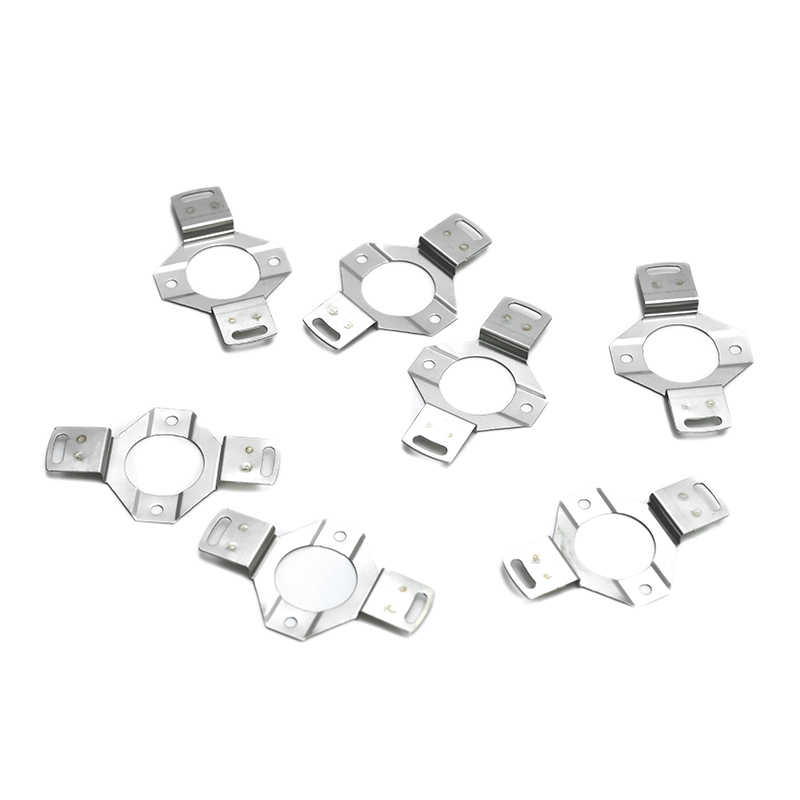
304 stainless steel is the workhorse. With 18–20% chromium and 8–10.5% nickel, it offers excellent formability and solid corrosion resistance for the majority of industrial conditions. It stamps cleanly into complex geometries — brackets, shims, electronic plug-ins, heat shields — and performs reliably in automotive, electronics, and general machinery applications. When in doubt, 304 is usually the right starting point.
316 stainless steel adds 2–3% molybdenum to the mix, which makes a meaningful difference in chloride-heavy environments. Marine systems, chemical processing equipment, and fluid control valves exposed to salt or acidic media call for 316. The tradeoff is slightly higher cost and marginally reduced formability — worth it when corrosion failure means downtime or safety risk.
410 stainless steel is a martensitic grade. It's harder and more wear-resistant than 304 or 316, but less ductile, which means it requires more controlled tooling and process parameters during stamping. It earns its place in parts that face abrasion, high stress, or contact loads — like seat adjuster components, certain valve seats, and structural fasteners. Don't use 410 where deep drawing is required; it will crack.
How Stainless Steel Behaves During Stamping — What You Need to Know
Stainless steel is not just harder steel. It work-hardens rapidly during deformation, which changes the material's properties mid-process. This is good news for final part strength, but it complicates multi-stage forming. Every bend, draw, or pierce operation incrementally increases resistance, and tooling that ignores this will produce scrap or premature die wear.
Springback is the other challenge. Because stainless steel has a higher elastic modulus than mild steel, formed parts tend to recover more after the press releases. Precision die design compensates for this — an operation planned for ±0.05 mm tolerances needs to account for springback in the die geometry itself, not as an afterthought. For 304 and 316, cold-rolled sheets can achieve tolerances of ±0.02–0.05 mm under standard conditions; fine blanking on 0.5 mm 304 sheet can reach ±0.01 mm with a surface roughness of Ra 0.4–0.8 μm.
Lubrication matters more with stainless steel than with carbon steel. Without proper chlorine-free lubricants and controlled forming speeds, galling will damage both the part surface and the die — compressing your tooling lifespan and raising per-part cost.
What Grade 304, 316, and 410 Parts Actually Look Like in the Field
Knowing which grade handles which application eliminates guesswork. Here is how these grades map to real components:
| Grade | Typical Stamped Parts | Key Advantage |
|---|---|---|
| 304 | Brackets, heat shields, car gaskets, electronic plug-ins, shims, metal shrapnel | Best formability; cost-effective for general use |
| 316 | Water valve fasteners, turbo sealing gaskets, marine hardware, fluid system parts | Superior chloride & acid resistance (Mo addition) |
| 410 | Structural brackets under load, wear-contact components, high-pressure fittings | Highest hardness; heat-treatable for added strength |
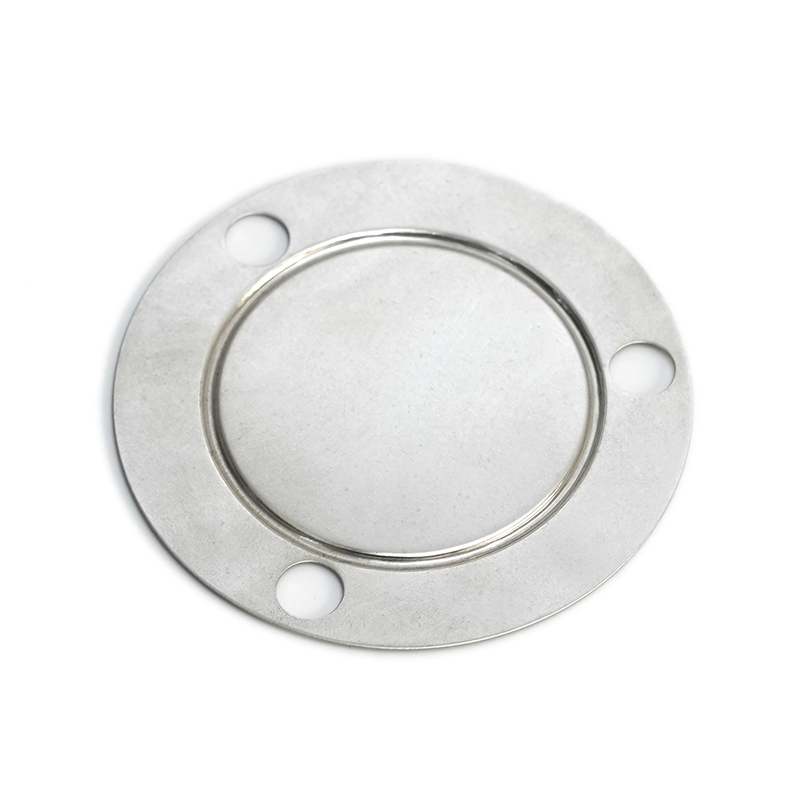
For example, a stainless steel turbo sealing gasket for turbocharged engine applications uses high-grade stainless to withstand temperatures up to 1000°C (1832°F) while maintaining a leak-free seal under constant pressure cycling. A wear-resistant high-pressure stainless steel shim for precision alignment tasks, by contrast, demands flat, consistent thickness and surface hardness — problems better solved by 410. Matching the grade to the mechanical reality of the application is what separates a durable part from a warranty problem.
Die Design: The Factor That Determines Whether You Get What You Specified
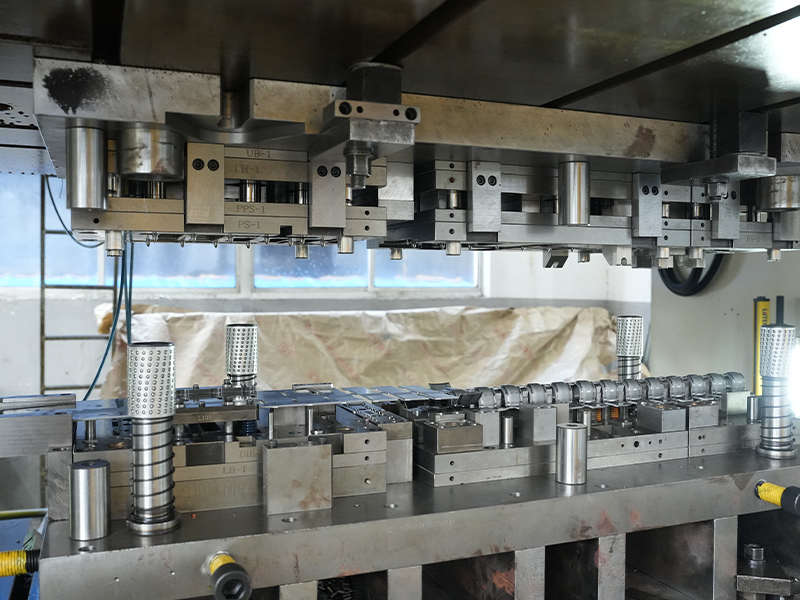
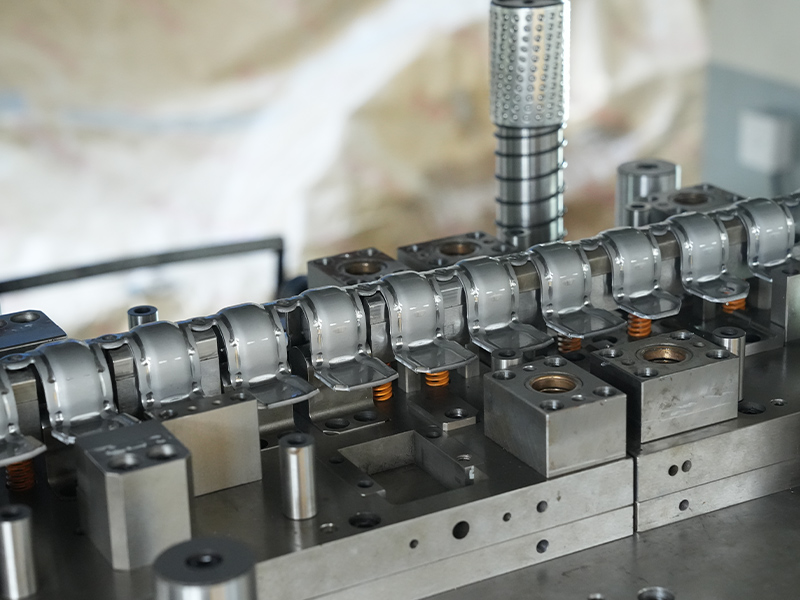
Material choice gets most of the attention, but die design is where specifications either get met or quietly abandoned. Progressive dies — which execute multiple operations (blanking, piercing, bending, forming) in a single press stroke — are the standard for high-volume stainless steel stamping. They reduce handling, maintain dimensional consistency, and lower per-piece cost at scale.
For harder grades like 410, progressive die components require hardened tool steel and more conservative press sequencing to manage the material's reduced ductility. For deep-drawn 316 parts, die radii are typically set at 4–6 times the material thickness, and intermediate annealing at around 1050°C is sometimes required for severe draws. These are engineering decisions that need to happen before production begins — not adjustments made after scrap rates climb.
The practical outcome: a supplier who understands die design for stainless steel will hold tighter tolerances across longer production runs. For custom stainless steel stamping parts across 304, 316, and 410 grades, this means your tenth-thousandth part matches your first.
Surface Finish and Post-Processing: Don't Leave It as an Afterthought
Stainless steel stamping parts often go through secondary operations that affect both function and appearance. Passivation removes free iron from the surface and restores the natural chromium oxide layer — critical for 316 parts used in food contact or medical adjacent applications. Electropolishing delivers an even smoother, more uniform surface for applications where hygiene or reduced friction matters.
Surface finish also affects how parts integrate into assemblies. A 2B or BA finish on 304 sheet provides a consistent baseline for parts that will be welded or assembled with other components. For automotive parts like stamped stainless steel heat shields used in exhaust system protection, the surface must resist oxidation at elevated temperatures without flaking or scaling into sensitive areas of the vehicle. Specifying finish requirements at the design stage — rather than requesting it as a separate step — keeps costs lower and quality consistent.
Practical Checklist Before Ordering Stainless Steel Stamped Parts
Before finalizing a sourcing decision, confirm these points with your supplier:
- Grade confirmed for the environment: chloride exposure → 316; wear/load → 410; general use → 304.
- Sheet thickness specified: 0.3 mm minimum recommended for 304/316; 0.5 mm for ferritic and martensitic grades in most applications.
- Tolerances documented: standard progressive stamping achieves ±0.05 mm for critical dimensions; fine blanking can reach ±0.01 mm where needed.
- Die design reviewed early: especially for complex geometries, deep draws, or 410-grade parts where formability limits apply.
- Post-processing defined: passivation, electropolishing, or specific surface finish grade (2B, BA, No. 3) stated in the drawing or spec sheet.
- Quality system verified: ISO 9001 certification or equivalent quality management system ensures part-to-part consistency at volume.
Stainless steel stamping parts are not a commodity buy. The grade, the die, the process controls, and the finish all interact. Get those aligned from the start, and you have components that perform as designed — for the lifetime of the product.